Belle Gentry
The Door into SummerBelle Gentry is a former business adversary of Dan Davis whose later life makes the cost of her earlier ambitions visible. When Dan finds her in Los Angeles, she has neither retained the prosperity he believes she took from him nor preserved the sharpness and authority she once projected. Her reunion with Dan yields fragments about her break with Miles Gentry and the family dispute over his will, while a later investigation uncovers a record of repeated marriages, changing identities, and a felony conviction. Dan ultimately turns that record into evidence for Ricky, making Belle’s past consequential even after her personal influence has ebbed.
Identity and Return
Decades after Dan’s conflict with her, Belle greets him warmly over the telephone, calling him “Danny darling” and asking whether he knows her. He does: the recognition brings an old antagonist back into the narrative at the moment Dan is searching for Ricky. He agrees to meet Belle because he believes she is likely to know where Ricky is, but the meeting is an inquiry, not a reconciliation.
Belle wants Dan to take her to dinner. He refuses to eat or drink with her, explaining through his conduct that he will see her but will not extend the trust or intimacy such a meal would imply. He goes to her address that evening. The contrast between her affectionate greeting and his guarded purpose establishes the meeting’s terms: she treats their renewed contact as a welcome personal encounter, while he approaches it as a possible route to information.
Appearance and Circumstances
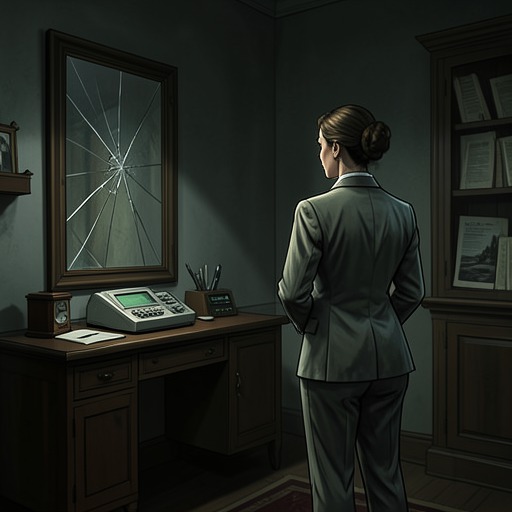
Belle lives in a cheap walk-up rental in lower La Brea, an area not yet converted to New Plan. Before he reaches her door, Dan infers that she did not hold on to what she had bilked him out of; in his judgment, the shabby apartment is evidence that her earlier advantage did not translate into lasting security. When he sees her, he decides that revenge has come too late, since she and the intervening years have already accomplished its work.
Dan estimates that Belle is at least fifty-three, based on the age she had claimed, and probably nearer sixty. He notes that women who wished to preserve a youthful appearance could, with the help of geriatrics and endocrinology, remain looking thirty for many additional years. Belle, by contrast, has not made that effort. His description of her as fat, shrill, and kittenish, and his attention to her revealing Sticktite negligee, present her as still relying on her body as an asset while neglecting it. The disparity between the image she seems to offer and the unflattering reality Dan sees sharpens his sense that time has already undone the woman he once might have wanted to punish.
Her decline is not only physical. Dan judges that her formerly keen brain has become fuzzy, leaving her conceit and overpowering self-confidence intact. She rushes at him with squeals of joy and nearly kisses him; he has to push her wrists back and tell her to take it easy. Her exuberant welcome thus meets a visitor who maintains physical and emotional distance, and her inability to read that distance contributes to the scene’s uneasy, almost farcical tone.
The Break with Miles
Dan asks Belle to bring him up to date on how she and Miles made out with the Mannix people. She responds that they did not, and immediately blames Dan, although he points out that he was not even there. The exchange reveals that Belle still interprets the collapse of her plans through a grievance against him rather than offering a clear account of what happened. Dan already knows that Hired Girl’s full corporate name has become Hired Girl Appliances and Geary Manufacturing, Inc., though the signs still read simply “Hired Girl”; he concludes that Belle has told him little of use and turns to another question.
When Dan asks whether Belle and Miles sold their stock after licensing to Geary, she breaks down. She cries that Miles cheated her and pushed her out, then expands the charge to include Dan, whom she calls the worst of those who cheated her after she had been good to him. Her accusation recasts an old business conflict as personal betrayal, but she does not give Dan a concrete account of the stock transaction. Instead, the complaint becomes a grievance about what she believes Miles promised and what he left her.
Belle says Miles left everything to his “dirty brat” after promising it to her and after she nursed him when he was hurt. She insists the daughter was not even his own, treating that claim as proof of injustice. The passage presents this as Belle’s accusation, not independent confirmation of the family relationship or of any promise Miles made. Her version is emotionally absolute: she understands the will as a betrayal of the care she says she provided, and regards Ricky as an illegitimate rival who has taken what should have been hers.
Ricky and the Limits of Belle’s Knowledge
Belle’s resentment extends beyond the will. She tells Dan that he had been in love with Ricky and insults both Ricky and her cat. Dan feels anger at the mention of Pete, but suppresses it enough to return to his practical question: where did Miles and Ricky live, and how did Miles address letters to them? Belle first kicks at him and says she will not talk to him, blaming his behavior since he arrived. Then she appears to sober almost instantly and offers a limited recollection: Ricky’s grandmother’s name was Haneker, or something like that.
Belle says she saw the grandmother only once, in court, when the family came to deal with the will. Asked when this happened, she answers that it was right after Miles died. The detail gives Dan a lead, but the uncertainty in the remembered surname and Belle’s limited contact with the family place a clear boundary on what she can provide. She is potentially useful because she was connected to Miles and appeared at the will proceedings, yet her hostility toward Ricky and her deteriorating memory make her an unreliable source for the wider search.
Past, Evidence, and Consequence
Later, while working sixteen hours a day on Drafting Dan and Protean Pete, Dan secretly commissions a detective agency with national branches to investigate Belle. He acts anonymously through John Sutton’s law office, supplies Belle’s address and her car’s license number and model, and suggests that she may have been married repeatedly and might have a police record. He limits the budget, expects little when the agency does not respond within ten days, and then receives a thick envelope at the law office a few days later.
The report describes a history of shifting identities and uncertain marriages. Belle was born six years earlier than she claimed and had married twice before she was eighteen. One marriage did not count because the man already had a wife; the agency could not establish whether Belle had divorced the second husband. It found that she had apparently married four more times, although one marriage was doubtful and might have been a “war-widow” scheme involving a dead man who could not object. Belle had been divorced once as the respondent, one husband had died, and she might still have been married to the others. The account’s qualifications matter: the agency documents a tangled record but does not resolve every legal tie.
Her police record is described as long, but the agency found only one felony conviction. In Nebraska, Belle was convicted in a badger-game case and paroled without serving time. Investigators established her identity through fingerprints: she had jumped parole, changed her name, and acquired a new Social Security number. When the agency asks whether it should notify Nebraska authorities, Dan tells it not to. He notes that Belle had been missing for nine years and had been convicted of nothing worse than running the swindle, while wondering whether he would have made the same reflexive decision if the offense had been drug dealing. His choice both limits the immediate consequences of the report and leaves him aware that an apparently simple decision carries its own complications.
Dan prepares the investigative material as a document marked “To Be Opened in the Event of the Death of Miles Gentry.” He gives the envelope to Ricky without explaining its contents, telling her only to keep it. The evidence, he reasons, should make a court fight over Miles’s will no contest at all when placed in a lawyer’s hands. Belle’s past therefore acquires a final function beyond the damage it did to her own standing: it may help Ricky contest the will and secure a legal advantage in the dispute Belle herself had described so bitterly.